Simulation Theory Politics correlates with Literary Theory | George Lucas of the Political World - Louis de Barraicua
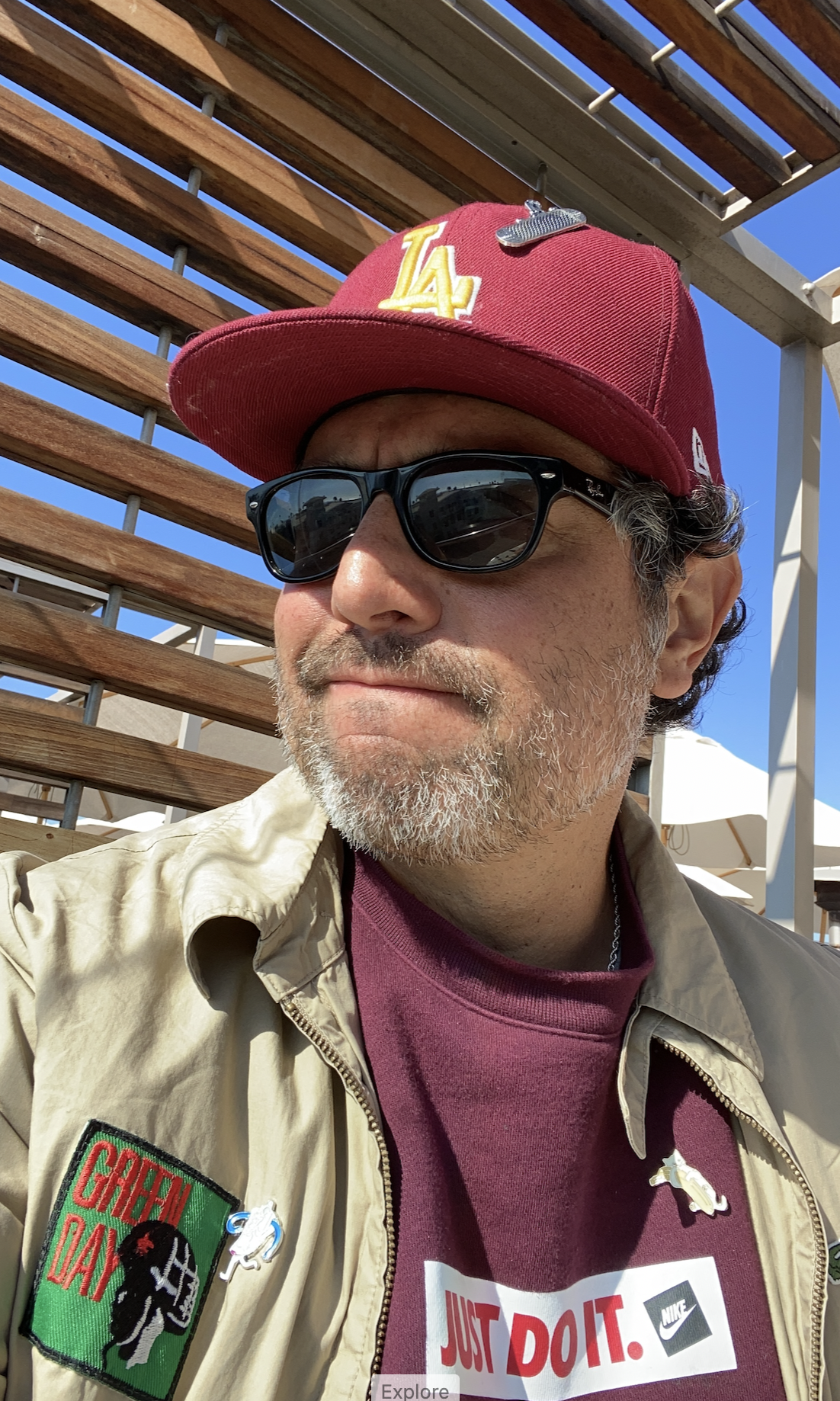
California Governor Candidate Interview | Get to know him!
March 27th, 2026, 8:49 am
Penelope and the Architecture of Power: A Dialogue in the Key of Myth
Penelope: Explain how you draw parallels between The Odyssey and your own life.
Louis: In literary theory, symbolism is not ornament, it is hidden infrastructure. It is the deep encoding of meaning into narrative, designed to survive time, to migrate across generations, to reappear when history forgets how to name itself. The Odyssey is not merely a story of return; it is a manual of survival within systems designed to consume the individual.
Odysseus, you’ll recall, is trapped by the Cyclops, a one-eyed monster whose vision is not just impaired, but singular. Monocular. Totalizing. He sees only one thing, and therefore misunderstands everything. Odysseus escapes not through force, but through authorship; he renames himself “Nobody,” and in doing so, rewrites the rules of engagement.
The lesson is not subtle: when confronted with a system that cannot see complexity, one must become illegible to it.
Now translate that forward.
A one-eyed king is any system governed by a single obsession, money, control, preservation of power, mistaking that fixation for divine authority. It is sovereignty without wisdom. Rule without sight.
Penelope: Who is the One-Eyed King in your story?
Louis: The Los Angeles Unified School District.
Not as an abstraction, but as a functioning organism. When they entrapped me at Louis Armstrong Middle School, through knowingly false accusations, they assumed I would respond as individuals typically do within bureaucratic systems: defensively, reactively, quietly.
Instead, I shifted the narrative frame.
Where Odysseus declared himself “Nobody,” I did the inverse. I declared myself “Somebody.”
And that inversion was the trick.
Penelope: How was that the trick?
Louis: Because institutions, like the Cyclops, rely on predictable scripts. Lawyers, administrators, they operate at the level of procedural reality. They understand rules, but not narrative. Structure, but not symbolism.
By asserting that I was “Somebody,” I violated their expectations. To them, it signaled irrationality, ego, weakness. They misread the gesture.
And in that misreading, they exposed themselves.
Their assumption, that I was overplaying my hand, created a space in which they revealed the mechanisms behind their own actions: a pattern of manufactured allegations, quietly systematized; a machine that sustains itself not through truth, but through repetition.
What emerged was not a single incident, but a structure, one that manages billions in public funding while operating with minimal narrative accountability. A system sustained, in part, by proximity to localized wealth and influence.
I did not discover it in the abstract. I triangulated it because they made the mistake of engaging me.
Penelope: Why did LAUSD make an error coming after you?
Louis: Because they mistook me for a participant, when in fact I was an observer.
Most individuals caught in such systems seek escape. I sought understanding.
I am a trained storyteller. Which is to say: I recognize patterns, I follow threads, I understand that what appears chaotic often has authorship behind it. And once you see the authorship, you can begin to rewrite the text.
What I encountered was something stranger than fiction, a lived narrative with stakes, characters, and consequences.
A civic landscape
not unlike an open-world simulation like ours
systems operate, whether or not the player understands them.
I went higher, like one of those intercontinental ballistic missiles
I embedded myself within the environment, observed its culture, its incentives, its blind spots. And when I saw the consequences, on students, on teachers, on the very idea of public education, I recognized that observation alone was insufficient.
At some point, the narrator must intervene.
Penelope: How do you intervene with such an established system like LAUSD?
Louis: You don’t “take it down” in the conventional sense. You out-narrate it.
My approach was threefold:
- Gather data: Not just facts, but patterns. The difference between an incident and a system is repetition.
- Return to origin: I revisited my alma mater, USC, not as nostalgia, but as a strategic node within the cultural architecture of Los Angeles.
- Pursue structural authority: By running for California Governor, I positioned myself at the level where educational systems are not just experienced, but governed.
Penelope: Why USC?
Louis: Because institutions like USC are not peripheral; they produce the individuals who go on to shape industries, narratives, governance. They are, in a sense, Troy - the parallel training ground before the battle extends into the world.
To understand Los Angeles, you must understand the institutions that reproduce its logic.
My return there was deliberate. Not ceremonial, but declarative.
Penelope: And what did you declare?
Louis: Not in the literal sense that one might expect. Institutions do not respond to proclamations; they respond to signals.
I made it clear
through presence
through narrative
through the articulation of a broader vision
that the story had shifted.
That we are no longer in a moment where candidates are evaluated solely on policy checklists, but on the narratives they construct
Illusions
What is the real reality?
It's a dystopia.
Penelope: And your role within that narrative?
Louis: Every era produces its storytellers. Some write films. Some write laws. A rare few attempt to write systems.
If politics is, at its core, the authorship of reality, then I am operating as a storyteller within that domain.
Not merely participating in the political world, but attempting to reframe it.
You could say: where others manage the script, I am attempting to rewrite the genre.