The End of Homelessness Solves Healthcare & Education Simultaneously
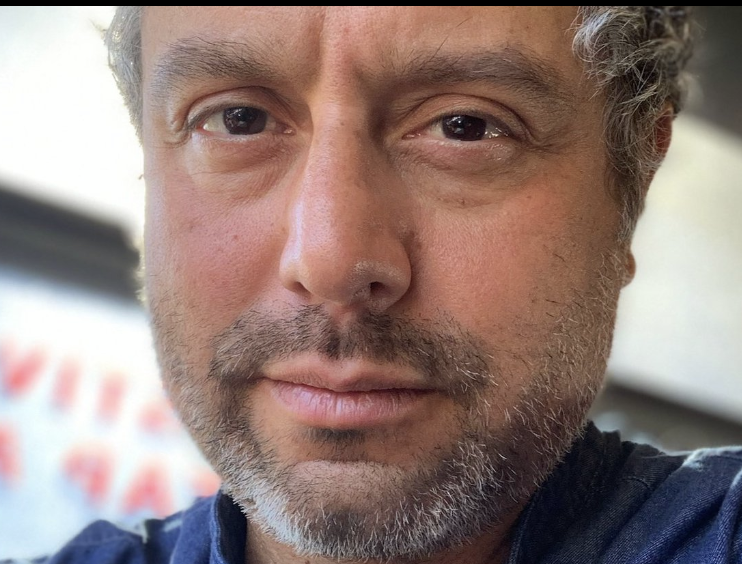
Penelope Roberts: What has been your experience with the Healthcare System been post LAUSD?Louis: I realized I can't afford healthcare because when you make the monthly payment you have to pay significantly more when you actually use it. It's a terrible system. I'm doing a full Bourne Identity now, going healthcare free.Penelope: How has the experience affected how you'd address healthcare in California? Louis: I grew up as a military kids not thinking about being taken care of, and it seems like a luxury to be in that position. Once you get out of the industrial age matrix, paying for healthcare means paying into a system with inflated costs for Wall Street profiteering. The reality is that taking care of people is much less expensive than what they're making it. My plan is to demonstrate how a local healthcare model could solve that problem. Penelope: How would Governor De Barraicua address healthcare, specifically?I'd create a demonstration of how it could be done through a narrative I'd share with the public to get their feedback. I'm a well-trained storyteller. In Roseville where my parents live, I belong to a literature analysis group with my parents, and my father was asked to designed a healthcare system that used today's tools to build a system from scratch. As a Doctor with deep experience into our systems, I was impressed with what was presented. It's about reconnecting with healthcare that prioritzes individual narratives locally that is overseen by a system that connects people to their doctors in ways that is much more pleasant than the patient factory we've constructed. Penelope: Tell us what the new system would look like. Louis: Local living is something that does not exist today in. many neighborhoods that rely on cars in large suburban areas. The plan to end homelessness means organizing ourselves in the virtual world like a village that collaborates locally. Though you cannot see the village physically, the village become the concept of a community that is organized to collaborate among themselves. I've developed a way to make this possible that would create a system of healthcare that make it possible for each patient to become a part of a chapter-based narrative that gives them the appropriate care locally; this process is weaved through a process I've integrated into a the story I will be directing as Governor - "The Golden Road" Penelope: How is your funding for your campaign?Louis: Asking for money is a responsibility that requires the person who asks for it to provide a clarity for how it will be spent. I realized that I'd have to create a well thought out process; and when I announce my campaign on April 1st. I hope to have my EIN number by then to make a trip to the bank with the treasurer of my campaign to accept donations. In the meantime, I am introducing myself, not asking for money; this gives me time to prepare the presentation for funding the campaign to bulid an awareness of exactly what the "The Golden Road" narrative will make real. Penelope: What is "The Golden Road"? Louis: "The Golden Road" first three events are 1) Creating a Process that captures the main plot points of California's narrative and figure out a way to explain it to California citizens. That means it has to be entertaining. "The Golden Road" is that interface. The second plot point is to demonstrate how local micro-economies work so that they can be scaled. I will be doing that demonstration myself, as the first local community leader, I'll be the teacher who sets the example, just like I did for 19 years a middle school teacher. It has to be a fun presentation that lays out a plot line of incentives to get people participating. The third plot line is articulating how education will go from the industrial age to an the media age that engages children with real-world environments thorugh a narrative where resonance guides their pathway so that we can help locals identify their plot line chapter-by-chapter in their lives. I started working on this project in 2013 when I entered the Global Learning Xprize in 2014. Penelope: How will you transition California from the current healthcare system?Synergy occurs when you match unmet needs to begin the conversation. Corporations want to succeed, and I've found a way to make what exists today with what can exist tomorrow; real plot lines happen when the interface examines how to create a transition from one system to another. I've thought of a concept, but it will require more research to make it possible. Penelope: How would you demonstrate this system?Louis: "The Golden Road" will simulate the reality first, then make the story real through an interactive narrative a community of 200 people will help simulate to the rest of the state. I am organizing the archetypes that is representative of a community that has all the roles fulfilled, including twenty unhoused; ten thousand of these communities could effectively end homlesssness by 2028. Penelope: How would that be possible?Louis: Scalability is teaching; the best teaching is storytelling, entertainment; what's the realest entertainment there is? Our lives; therefore, coming to the realization that we must see what we want before we know how to participate is at the heart of "The Golden Road" .