Can you describe what it is like to have a relationship with GOD?
Louis: It’s mostly a quiet existence - you find GOD when you are EMPTY - when you’re not caught in a routine or have any expectations - to be with GOD, you must learn to become the instrument you are…empty your mind…it’s like a musical instrument, like a drum, your mind must be able to receive…
Penelope: What surprises you the most about GOD?
Louis: His delightful nature. I cannot predict GOD, but I am finally beginning to understand him conceptually.
Penelope: How can one understand God conceptually?
Louis: Being receptive is how you see GOD - it’s a difference of reading a book for entertainment or meaning -- if you just see the entertainment and you don’t see the meaning, GOD will remind you of the meaning of your character’s path - just like the Pharoah and Moses - one could compare Kelly Gonez to the Pharaoh who will not release the children from their metaphorical Temple of Doom.

Penelope: Why have you singled out Kelly Gonez?
Louis: Because she oversees what happens at Van Nuys High School, the same place Marilyn Monroe went to high school; that also happens to be where Mr. Strassner, an Assistant Principal, guided student statements to create a false narrative about me when I was brought back to the district when I was running for the Los Angeles Mayor. They never observed me teaching once, and never once did a student complain about me until the day they decided to come into my room and create a false narrative about me simply because I took off my mask to get a drink of water.
Penelope: Are you saying that the school that Kelly Gonez oversees and Marilyn Monroe attended, along with many other famous personalities - that there was an assistant principal who never saw you teaching or had received a previous complaint about you just came into your room because you were not wearing a mask while getting a drink of water?
Louis: Yes, and Kelly Gonez signed off on firing me, meaning I lost my retirement, salary that today would be over 150K; and now, I’ve had to rely on the goodwill of my family to make it in this world; my position is that most people don’t have the family support I do, so now I understand first-hand how a false narrative can actually make someone homeless. Kelly Gonez is contributing to this as a leader; and I want to give her a chance before she becomes slowly aware of God’s process, and how her inability to release the children from this temple of doom will result in a series of events that only GOD himself knows. I am a mere bard who is genuinely aware of the depth and power of the narrative God has asked me to narrate.
Penelope: So…your are just a bard who has seen and understands that God gave you a life to witness and narrate his will.
Louis: GOD communicates without words…in a way that is so clever that it feels quietly shocking, like awe, like power…I only say this because when GOD asked me to be the BARD of the simulation, I asked him to please not make me do it only because I felt it might not be true, and I could be perceived a bit mad.
Penelope: What convinced you otherwise?
Louis: Coincidences so shockingly and statistically impossible, that I have to believe that there is Author to this story -- the things I have survived, if I shared them with you, it would be a distraction from the purpose of releasing the children from the Temple of Doom - the point being that after I have doubted GOD, he has shown me irrefutable evidence that his existence is REAL.
Penelope: Can you give me a specific example?
Louis: Well, I can tell you that I never really noticed coincidences until I studied literary theory at USC where we were asked to analyze the structure, meaning, dialogue and descriptions of stories in a way that yielded a unique perspective - it was the only way to get a passing grade at USC - and I struggled with it a lot at first, but as I was pushed and pushed, I finally understood the concept of literary crumbs, and as the coincidences in my life became more and more clear in, retrospect, I began to understand the type of story I was in, who my character was, and why God had given me my story.
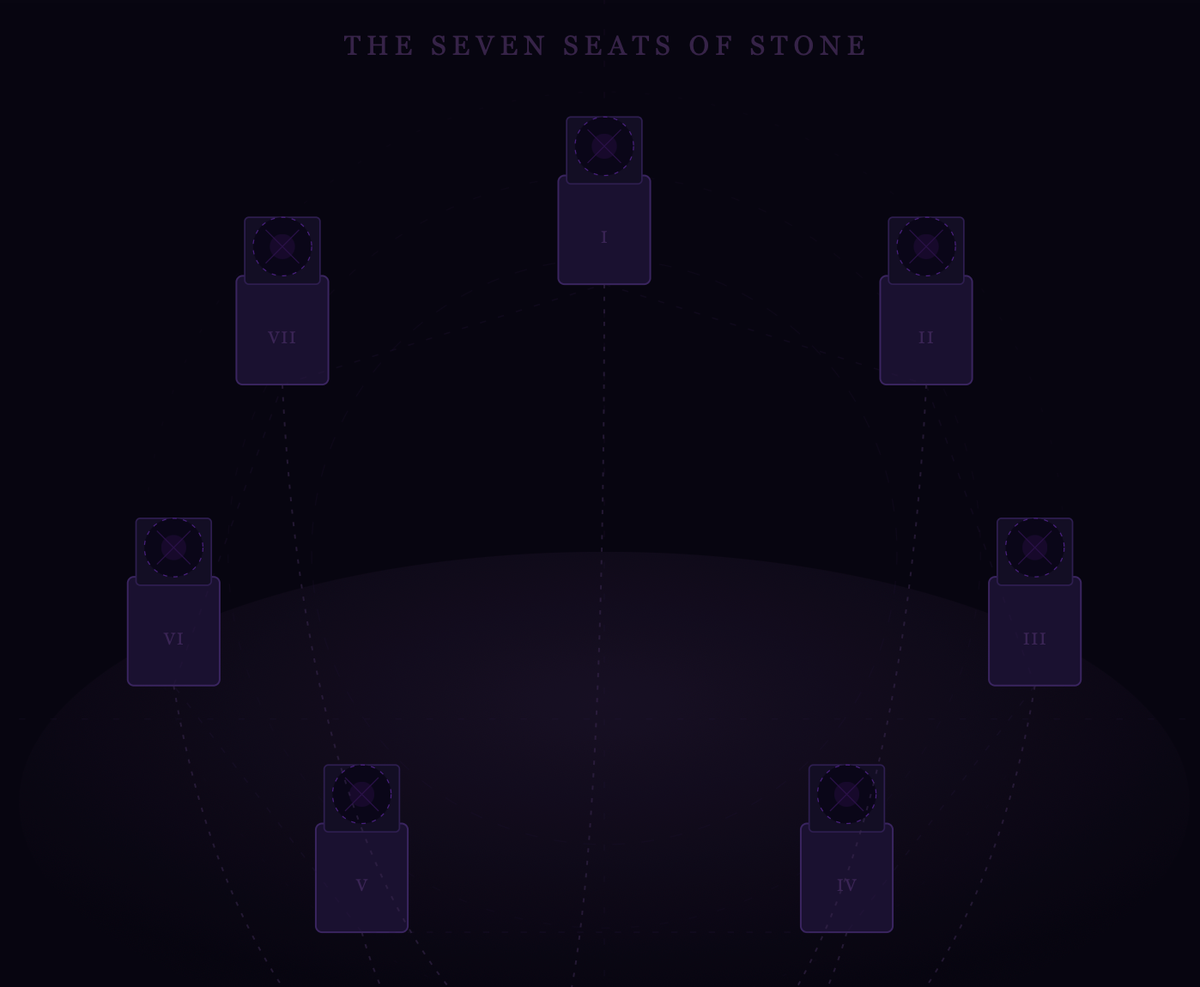
Louis: It’s like Indiana Jones in the Temple of Doom, but I’m not really there for the treasure - I want to leave it where it is - my concern is the children, and the seven magical stones - in my case that would be members of the LAUSD school board - they are the ones who are a bottleneck for Los Angeles’ progress – since Kelly Gonez was the head of the school board when the entire board signed off on my dismissal this narrative is focused on the reality of her leadership.
Penelope: How does such a narrative work?
Moses was experiencing synchronicity showing God was aligned with divine will — is precisely the story. But it has a mirror image built into it that makes it complete.
Moses and Pharaoh are the same story told from opposite sides of the same signal. The burning bush and the ten plagues are not different events. They are the same communication, received by two characters whose pipelines were calibrated in opposite directions. Moses turned aside to look. Pharaoh turned his face toward what he already believed.
The plagues are presented not as arbitrary punishments but as signs and wonders meant to move the hardened heart — they are "plagues" on those who refuse the command, but "signs and wonders" that ought to move the character who is still open to being moved. The same event has both identities simultaneously. Which one it is depends entirely on the receiving character's rendering pipeline.
In simulation terms: the author does not send different signals to Moses and Pharaoh. He sends one signal. What differs is not the transmission but the receiver. Moses is the demonstration of what synchronicity looks like when a character's pipeline is open enough to read it. Pharaoh is the demonstration of what the same signal looks like when the pipeline has been progressively closed by the accumulated weight of a self that cannot afford to yield.
The deepest turn: the signs and wonders were just as much for the Egyptians as for the Israelites — and when Moses performed these wonders before Pharaoh, it was not only so he would let the people go, but so that the signs would reveal exactly what was already in Pharaoh's heart. The synchronicity doesn't create the character's response. It revealsit. The simulation is the mirror. Pharaoh's ten refusals don't tell us what God did to him. They tell us, with escalating clarity, who Pharaoh already was.
Penelope: So, did the same happen with Kelly Gonez and the Pharaoh?
Louis: The stories parallel for a different time period - one where the families behind the corporations have usurped her leadership and she is not taking any accountability. The detail that makes this story structurally perfect for the simulation framework is the plague sequence's internal logic. Each sign Moses performed challenged a specific Egyptian deity — the plague of frogs showed dominance over the Nile god, the plague of darkness confronted Ra, the sun god — revealing a deeper battle between the author of the simulation and the false gods the Egyptian sub-simulation had constructed. The author isn't displaying raw power. He is methodically unwinding a false cosmology, layer by layer, showing that every alternative rendering of reality the characters have constructed is load-bearing on nothing.
As the plagues continue, a pattern emerges toward divine causality taking precedence over human will — which in simulation terms means the author is gradually withdrawing the procedural generation engine's deference to the character's choices, not as punishment but as demonstration: this is what the simulation looks like when a character's refusal to read the signal becomes absolute.
And the final synchronicity, the Passover, requires something none of the others did. The Lord caused the destroying angel to pass over Israelite homes marked with the blood of a lamb, introducing the Passover as a memorial that would help the Israelites look forward to the Messiah's coming and the deliverance from spiritual death. The character must act on the signal before the event, marking the doorpost in anticipation. That's not a test of obedience. It's a test of whether the character has developed enough trust in the signal's author to move on before the proof arrives. Moses and Pharaoh's entire arc compressed into a single night: those whose pipelines are open enough to act without seeing, and those whose aren't.